How Conveys Systems Drive Industrial Logistics
Release time:2026-01-25 Click:26
In the complex ecosystem of modern manufacturing and resource management, the verb "conveys" describes far more than simple movement; it represents the lifeblood of industrial continuity. Whether referring to pneumatic tubes, screw conveyors, or massive belt systems, the mechanism that conveys material is engineered for precision, durability, and speed. These systems are the unsung heroes of the supply chain, silently transporting raw ore, grain, packaged goods, or hazardous waste across vast distances within a facility. The efficiency of a conveyor system often dictates the throughput of an entire plant, making it a critical focal point for engineering optimization and cost reduction.
The physics behind how a system conveys load is a study in friction and tension. Roller conveyors utilize gravity and minimal energy to move items along an assembly line, while belt conveyors rely on high-friction surfaces to incline materials upward. Screw conveyors, or augers, use a rotating helical blade to push granular materials through a trough, a method essential for handling semi-solid sludge or agricultural products. Each method is selected based on the material's properties—abrasiveness, temperature, and flowability—ensuring that the product moves without degradation or blockage. This specialization highlights that "conveying" is not a one-size-fits-all solution but a highly tailored engineering discipline.
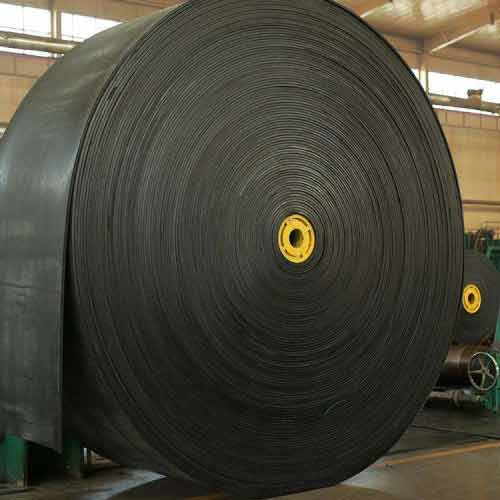
Material science plays a pivotal role in the components that conveys wear and tear. The belts themselves are often multi-ply rubber or PVC, reinforced with steel cords to resist tearing under heavy loads. Rollers and idlers are precision-machined from steel or high-density polymers to reduce rotational resistance and noise. In food processing, conveyors must be made of stainless steel that resists bacterial growth and withstands caustic washdowns. The choice of material directly impacts the system's lifespan; a conveyor in a quarry moving rocks requires different alloy compositions than one moving microchips in a clean room, demonstrating the versatility required in design.
Automation has revolutionized the way a facility conveys data alongside physical goods. Modern conveyor systems are embedded with sensors that monitor speed, belt alignment, and motor temperature in real-time. These IoT-enabled devices communicate with central control systems to adjust flow rates automatically, preventing jams and minimizing downtime. In logistics hubs, conveyors equipped with barcode scanners and cameras sort thousands of packages per hour, directing them to the correct shipping chute. This integration of mechanics and software transforms a passive transport system into an intelligent, self-regulating network that adapts to fluctuating demand.
Maintenance is the critical factor that ensures a system continues to conveys reliably over decades. The most common points of failure are usually the bearings, belts, and drive motors, all of which are subject to constant stress. Predictive maintenance, using vibration analysis and thermal imaging, allows technicians to replace parts before they fail catastrophically. Regular lubrication and tensioning are essential to prevent energy loss and material spillage. In industries where a stoppage costs thousands of dollars per minute, the maintenance protocol is as rigorous as the initial design, ensuring that the flow of materials never ceases.
Ultimately, the infrastructure that conveys resources is a testament to human ingenuity in overcoming distance and gravity. From the ancient water wheels that conveyed grain to the massive overland conveyors that transport coal across continents, the principle remains the same: efficient movement creates value. As industries move toward greater sustainability, new conveyor technologies are focusing on energy recovery—capturing the kinetic energy of descending loads to power ascending ones. This evolution ensures that the act of conveying will remain a cornerstone of industrial progress, driving efficiency in a resource-constrained world.
Previous article:Maximizing Efficiency with a Heavy-Duty Conveyor Belt
Next article:The Driving Force Behind Automated Material Handling: Chain Conveyors
Hot products
Mobile: +86 15369229308
Email:metalproducts2025@163.com
Email:565169797@qq.com